

Seattle’s World Cup run is over, and organizations that keep track of visitation and hotel revenue say the international tournament broke some records.
Over about three weeks, the city hosted six matches that brought visitors from countries including Egypt, Iran, Senegal and Bosnia and Herzegovina.
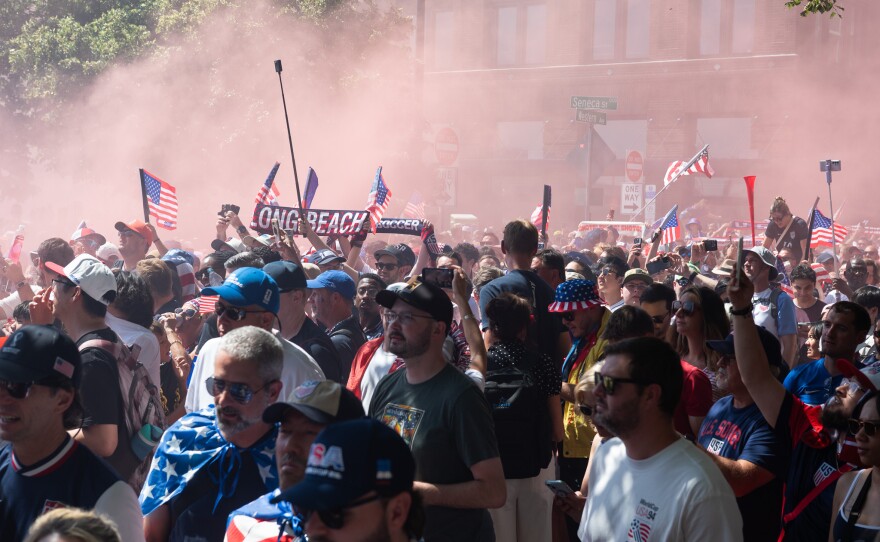
The United States match against Australia on Juneteenth attracted the biggest crowd.
The Downtown Seattle Association said that is when more than 580,000 people visited the area, making it the busiest day on record. That day, more than 28,000 people went to Pioneer Square’s Occidental Park, and around 9,000 people were in Westlake Park to watch the match.
Data from Visit Seattle, a nonprofit that promotes tourism for the city, shows that hotels broke revenue records by 40%. The previous record was set in 2023 when Taylor Swift performed at Lumen Field on her Eras Tour.


Kelly Saling, the nonprofit’s executive vice president, said Seattle introduced itself to a whole new audience that she hopes will spread the word about their stay here.
"Those stories and experiences is what will drive visitation in the future to our destination,” she said. “They will visit our downtown, our neighborhoods, our hotels, attractions, and small businesses for years to come."
The July 19 record may be short-lived; Saling said the U.S. match against Belgium on July 6 will likely topple those records, though they are still gathering data.
Not all of the city benefitted from being so close to the action. Some business owners near the stadium in the city’s Chinatown International District say that World Cup excitement didn’t reach them and, in some cases, actually hurt their sales.
Leaders with the CID Business Improvement Area put together a last minute watch party for the U.S. match against Beligum on July 6. Local organizers for the World Cup helped with that effort and said around 2,500 people showed up to watch the match.
The Seattle Sports Commission, a nonprofit that works to attract sport teams and events to the city, wants to use this momentum to bring more international sporting events. The organization hopes this global attention can help them win bids to host events such as the Men’s and Women’s Rugby World Cup and the Women’s World Cup in 2031, and potentially becoming a site for the Olympic and Paralympic torch relay in 2028.
The nonprofit’s president, Beth Knox, said the World Cup demonstrated that the region can handle hosting events like these.
"So we're looking at all these kinds of events, and there's a number of ones that are small and midsize that we are bringing into the consideration,” she said. “Those are just as important so that we have a balance of small- to mid-size to large, mega events."

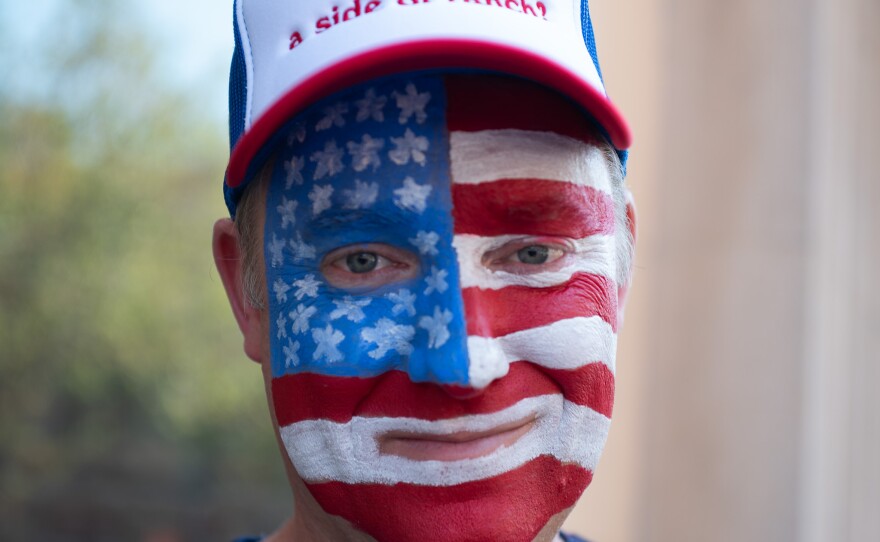

Peter Tomozawa, the chief executive officer for the city’s FIFA World Cup Local Organizing Committee, said he hopes the six matches allowed tourists to discover the city, and for locals to rediscover it.
The local organizing committee worked with the city of Seattle, the Puyallup Tribe, other local governments and businesses to send 1,400 kids to a World Cup match. Not all went according to plan; the SeaTac-based nonprofit African Youth Sports Academy returned 20 tickets after the U.S. denied a Somali referee entrance to the country.
Other organizations still participated. Tomozawa said he spoke with parents and kids about their experience, and one 14-year-old boy’s answer surprised him.
“I expected him to talk about what he saw on the field,” Tomozawa said. Instead, “He said, ‘I have never seen so many people happy. I’ve never seen Seattle this happy.’ I was, like, man, we nailed it.”


