Primary elections are fast approaching, and Democrats in some Western Washington races are facing early competition — from other Democrats.
At least five legislative races in the Seattle area have Democratic incumbents squaring off against intraparty challengers. Election cycles don’t typically see this many Democrat-on-Democrat showdowns. What’s more, these challengers present themselves as being more progressive than the incumbents. And some insiders say this could become a new normal.
“There's very few moderates left in either party to be honest,” said Republican political consultant Chad Minnick. “These days, it’s very hard to find that middle ground and get elected.”

Dean Nielsen, a Democratic political consultant, put it more bluntly: “The Republican Party is vanishing in Washington state.”
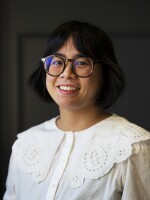
Nielsen said the challenge to Senate Majority Leader Jamie Pedersen is “particularly fascinating.” Hannah Sabio-Howell, a young millennial with a background in labor organizing, hopes to unseat the powerful Democrat in the 43rd district, which includes Seattle’s Capitol Hill neighborhood.
It’s the first time since Pedersen won this seat in 2013 that another Democrat has run against him.
Sabio-Howell said Pedersen, a longtime lawyer for construction company McKinstry, is too friendly with big business and is out of touch with his constituents, who are some of the state’s most politically progressive voters.
“I think right now we're seeing a community-based movement against status-quo, politics-as-usual Democratic leadership that has said, ‘We're delivering for you,’ while we look around and say, ‘Where is it? I can still barely afford to live here,’” Sabio-Howell said.
Pedersen is the architect of the state’s historic income tax on high earners, also known as the “millionaires tax,” which passed earlier this year.
“Majority Leader Pedersen has been, frankly, the most progressive Senate leader in Washington state history,” said Nielsen.
Sabio-Howell has said she supports Pedersen’s millionaires tax, but she also supports more taxes on the rich and on the state’s biggest businesses.
Pedersen said he tries to keep his progressive base in mind when crafting policy, but he also said that getting laws passed requires compromise.
“It's hard for people living in the bubble, that the deep-blue 43rd [district] sometimes is, to understand what it takes to get things passed in Olympia,” he said.
He said he welcomes a challenger from his own party.
“I think competition is really great for democracy, and I applaud that,” Pedersen said. “I'm glad that my constituents will have a choice, and I'm excited to get out and talk to them about the work that we've been doing.”
Another prominent race will see Rep. Amy Walen (D-Kirkland), a moderate who was one of the few in her party to vote against the millionaires tax, defending against Democratic challenger Jessica Forsythe, who supports the new tax.
In another race, challenger Imraan Siddiqi, an immigrant activist and executive director for the state’s Council on American-Islamic Relations, is running against the more moderate Rep. Lauren Davis, whose district includes part of North Seattle and stretches into Snohomish County.
In that same district, Rep. Cindy Ryu is making a run for Sen. Jessie Salomon’s seat, calling him “too moderate.”
Rep. Gerry Pollett (D-North Seattle) also is facing a Democratic challenge from Ron Davis, who ran unsuccessfully for Seattle City Council in 2023. Davis has called Pollett the “chief NIMBY in the Democratic caucus.”
“It's a very unusual year,” said Stephen Paolini, a Democratic political consultant representing Sabio-Howell. “Looking back over the last decade, we can count the number of challenges from Democrats against other Democrats on one hand, and this year there's half a dozen or more.”
Nielsen said these races are due to Democrats reaching a near super-majority in Olympia. As Democrats become the dominant party, Nielsen said the differences between the party’s factions will become more apparent.
“You already are starting to see some of those fracturings within the Democratic caucus, and as the caucus gets larger and the Republicans fail to compete in these elections, you're only going to see this more and more,” Nielsen said of the relatively high number of districts where Democrats face challenges from the left this year.
Minnick, the Republican political consultant, agreed. He blamed national politics for polarizing the parties in Washington state.
“What has happened is Trump is so unpopular with the left-wing base and with moderate independent voters on the left coast, where we are, that that dominates it so much,” Minnick said. “It doesn't matter what your policy positions are, as a Democrat, you know you're going to have the advantage.”
He said that Republicans saw their party move further to the right in recent years, and the leftward shift in the state’s Democratic party is partly a response to that.