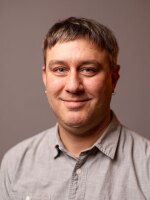
Seattle's preeminent jazz mallet player, Susan Pascal, had the unique experience of starting her musical journey on uncommon instruments — vibraphone, marimba, and xylophone.
"When I was six years old, I had lessons on a little xylophone at my house on how to read music, and I guess it stuck, because although I wandered from that later, I came back to playing percussion later," she said.
Pascal is the first person called when a Pacific Northwest band needs one of these instruments, and she's played with several groups in the KNKX studios. In 2015, she brought in her own long-running quartet with guitarist Dave Peterson, bassist Chuck Deardorf, and drummer Mark Ivester.
For three decades, Pascal has worked in various groups and styles. She's a master of Latin and Brazilian music, and she's also played in symphonies and jazz orchestras, performed TV and film scores, and played steel drum music. It all started in Shoreline, Washington, a suburb 10 miles north of Seattle where Pascal grew up.
"The school district had an awesome program, played in the band and orchestra and the youth symphony, and it was great because I had a classical background and became a good reader, and that's paid off," Pascal said.
As Pascal grew as a vibraphonist, she eventually discovered Gary Burton, the vibes master of the jazz fusion era. His classically-influenced improvisations and four-mallet technique gave Pascal inspiration to find her own voice on the vibes. She also draws on a childhood spent listening to classical music, show tunes, and Top 40 radio.
"Gary Burton and Chick Corea's album Crystal Silence...was such a great recording that affected not only vibraphone players but other jazz musicians as well," she said.
Pascal's unique musical expertise has led to opportunities across the musical spectrum, including the eclectic world of film and television music. Pascal played on a silly dream sequence for the movie "Office Space" and also on the soundtrack for "The Blind Side."
"Sometimes you'll find out, oh, well, this has a little vibraphone, or a little marimba. And then sometimes it'll be something very complex, like on "The Blind Side" — it had a lot of technical marimba on it. It was great. It was really fun to play," she said.
Pascal also understands her instrument has built-in barriers for curious young players. A vibraphone is nearly as big as a piano, but not nearly as common in a high school band room, and you can't get inspired to play an instrument if it's not there.
"I was always on the lookout for some kind of used thing on eBay or Craigslist to send their way, and so when I do that, I can try to get them out there into the schools, but it's not a hugely common instrument for kids, that's for sure," Pascal said.
Pascal said she's been gifted vibes to fix up for a young player before, but she quickly found that her hands were better suited to playing than rebuilding.
"I thought, okay, I'll restore this thing. It sat in my garage for a while, until I realized one of my students had a dad who had a machine shop and who had everything, so I said, 'Here you go,'" she said. "They got it, and they restored it, and now she's using it. It's fantastic."
Pascal continues to perform around Seattle and beyond, and she's inspiring a new generation of vibraphone players in the process.
Songs heard in this episode:
- "Cubano Chant"
- "All Heart"
- "Double Guatemala"